What Daniel Pink got right – and why purpose is now a business imperative
For years, professional services have been built on a familiar motivational model: work hard, perform well, progress up the ladder. Incentives, targets and status have been the assumed drivers of effort and engagement.
And yet, despite strong businesses and talented people, many firms now face a paradox:
- declining engagement
- fragile succession pipelines
- uneven commitment to business development
- and capable professionals who are technically excellent but increasingly disengaged
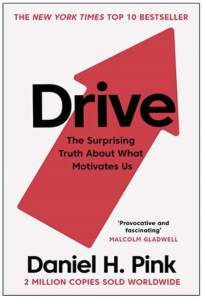
This is where the work of Drive by Daniel Pink becomes particularly relevant.
Pink’s research challenged a long-held assumption: that people are primarily motivated by rewards and punishment. Instead, he demonstrated that for complex, knowledge-based work—the kind that defines professional services—extrinsic motivators are not enough.
What truly drives sustained performance is something deeper.
The Three Drivers of Motivation
Pink identifies three core drivers of motivation:
- Autonomy – having control over how you work
- Mastery – the desire to get better at something that matters
- Purpose – understanding why your work is meaningful
In my work with multidisciplinary practices, it is purpose that consistently makes the difference.
When purpose is absent or unclear, people default to:
- doing what is required, but no more
- protecting their own patch
- avoiding discomfort (including business development)
- disengaging quietly rather than leaving loudly
When purpose is clear, behaviour changes.
Why Purpose Matters So Much in Professional Services
Professional services attract people who want to solve problems, apply expertise and make a difference. But as organisations grow, restructure or diversify, that sense of meaning can become diluted.
What I see repeatedly is this:
- people are busy, but not always fulfilled
- successful, but not always energised
- competent, but hesitant to step into broader leadership or client roles
Business development often suffers first—not because people don’t care, but because it feels disconnected from why they do the work in the first place.
Purpose reconnects the dots.
It helps professionals see:
- how their expertise contributes to clients’ bigger challenges
- how relationships amplify impact
- how growth enables better outcomes, not just bigger fees
Purpose and Business Development Are Linked
One of the most persistent myths is that business development motivation comes from confidence or personality. In reality, it comes from meaning.
When people understand:
- why relationships matter
- why growth protects the business and its people
- why their voice and insight are valuable beyond delivery
BD stops feeling like self-promotion and starts feeling like leadership.
Purpose doesn’t remove discomfort—but it gives people a reason to move through it.
From Individual Motivation to Organisational Resilience
At an organisational level, purpose is not a branding exercise. It is a practical tool for:
- aligning behaviour across disciplines
- encouraging collaboration rather than protectionism
- developing future leaders who want responsibility, not just promotion
- reducing reliance on a small number of rainmakers
Firms that invest in helping people articulate their personal and professional “why” tend to see:
- stronger engagement
- more confident client interaction
- greater ownership of relationships
- and more consistent business development behaviour
Not because people are told to do more—but because they want to.
Purpose Is Not Soft. It Is Strategic.
In a market where technical work is increasingly automated and interchangeable, human motivation becomes a strategic asset.
Purpose fuels:
- mastery over time
- willingness to stretch
- commitment beyond the job description
- and resilience in periods of change
This is why I increasingly see purpose-led development not as a “nice to have”, but as a core leadership capability.
Motivation Starts With the Right Questions
Purpose cannot be imposed. It has to be explored.
The most powerful shifts happen when professionals are given space to ask:
- Why does my work matter?
- Who does it help, and how?
- What kind of professional do I want to be?
- What role do relationships and growth play in that?
When those questions are taken seriously, motivation follows.
In professional services, mastering business development, leadership and collaboration ultimately comes back to the same thing: helping people do work that matters, with people they care about, for reasons they believe in.
That is not idealism. It is how sustainable performance is built.